

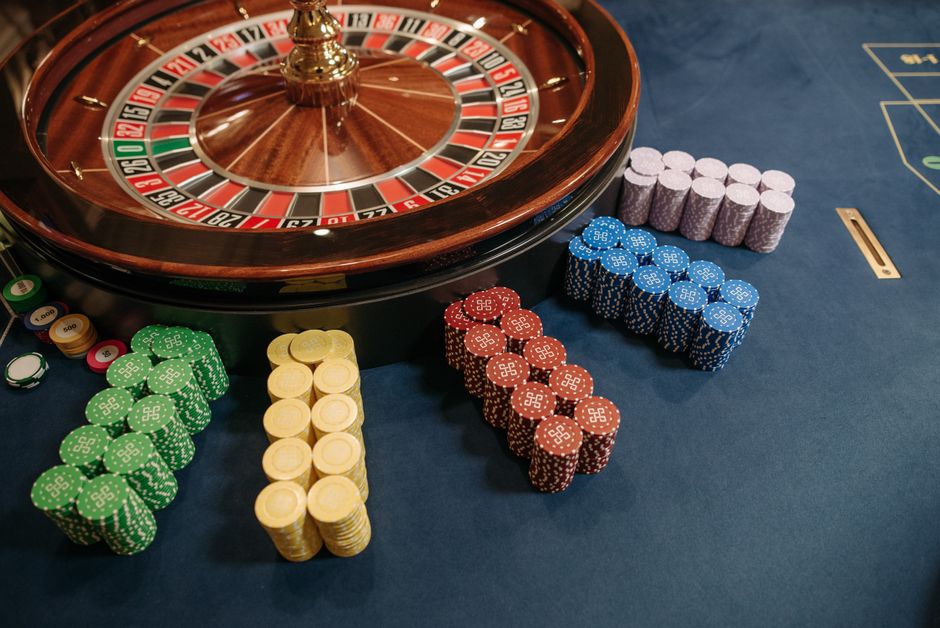
Why Smart Players Love Low-House-Edge Casino Games
Most casino players lose money. That's not pessimism, it's arithmetic. Every game on the floor carries a house edge, and over enough spins, hands, or rolls, the math always wins. The interesting question isn't whether the house has an advantage, but how big that advantage is, and whether you're playing something where it's small enough to be survivable. That single distinction separates players who grind for hours on end from those who torch their bankroll in twenty minutes.
Let's talk about what actually matters when you sit down at a table or load up a slot, and why some games give you a genuine fighting chance.
The House Edge Isn't a Suggestion, It's Math
Every game has a built-in percentage that the casino keeps over the long run. American roulette sits at about 5.26% thanks to that extra double-zero pocket. European roulette cuts it to 2.7% by removing one zero. Blackjack with basic strategy hovers between 0.5% and 1% depending on the rules. Baccarat's banker bet is around 1.06% after commission. Video poker variants like Jacks or Better can drop below 0.5% with perfect play.
The difference between 5% and 0.5% doesn't sound dramatic, but over a few hundred hands it absolutely is. Let's do a quick example. You bring $500 to a blackjack table and play 200 hands at $10 a pop, which is $2,000 in total wagering. At 0.5% house edge, your expected loss is $10. At 5%, it's $100. Ten times the damage for identical play volume.
Slots: Where the Real Bleeding Happens
Slot machines are the most popular games in any casino, and they're also usually the worst bet in the building. RTP, or return to player, tells you what percentage of all wagered money is paid back over millions of spins. A slot with 96% RTP keeps 4% on average. A slot with 88% RTP keeps 12%. That gap is enormous.
- Online slots typically range from 94% to 97% RTP, with a few outliers hitting 98%+
- Land-based casino slots often sit between 85% and 92%, especially in high-traffic tourist areas
- Progressive jackpot slots usually have lower base RTP because a slice feeds the jackpot pool
- Volatility matters as much as RTP: high-volatility slots pay rarely but big, low-volatility slots pay often but small
A 96% RTP slot and a 90% RTP slot look identical on the surface. Same graphics, same spin button, same flashing lights. But if you spin $1,000 through each, the math says you'll lose $40 on one and $100 on the other. Always check the RTP. It's usually buried in the paytable or the game info screen, and there's no reason to play a slot that doesn't publish it. Take a look at nowgoall.it.com for a fuller picture.
Poker Is a Skill Game Wearing a Casino Costume
Here's where things get interesting. In poker, you're not playing against the house in the traditional sense. The casino just takes a rake, a small cut of each pot, and lets players battle it out. That means a skilled player can actually be profitable long-term. The rake is the only built-in leak, and it varies wildly.
Live low-stakes cash games might rake 10% capped at $5 per pot. Online micro-stakes games sometimes rake 5% capped at $3. Tournaments charge a buy-in plus a fee, and a "$100 + $9" structure means you're paying 9% just to sit down. Those fees matter. A winning player grinds out edges of a few big blinds per hundred hands, and a heavy rake can eat the entire margin.
For beginners, the temptation is to jump into cash games immediately. Don't. Play micro-stakes tournaments first. The variance is higher, but the fixed cost is smaller, and you get exposure to hundreds of situations without risking a full buy-in on a single bad river card.
Betting Markets: Beating the Vig
Sports betting has its own version of the house edge, called vigorish or "the vig." Standard point spread bets are priced at -110 on both sides, meaning you risk $110 to win $100. That translates to roughly a 4.5% hold for the sportsbook if action is balanced. Sharp bettors hunt for lines where the price is better, or where they believe the true probability differs from the implied probability.
- Compare odds across multiple books before placing any bet
- Track closing lines to see whether your bets beat the market
- Understand that profitable betting is about volume and small edges, not parlays
- Treat promotions and boosted odds as real value, because they usually are
Parlays are fun and they pay big, but the house edge compounds with every leg. A four-team parlay at standard pricing carries a much steeper effective hold than four separate straight bets.
Practical Rules for Not Getting Slaughtered
None of this matters if you don't apply it. So here's the short version of what experienced players actually do.
- Never play a game without knowing its house edge or RTP
- Prefer blackjack, baccarat, and European roulette over slots and keno if longevity matters
- Set a session loss limit before you start, and walk when you hit it
- Take advantage of comps, cashback, and deposit bonuses, since those effectively lower the edge
- Avoid side bets and gimmick wagers; they exist to pad the house's take
The psychological trap is that near-misses feel close. A slot that shows two cherries and a lemon feels like it almost paid. It didn't. Independent random number generators don't care about momentum, and "due for a win" is a story we tell ourselves. The only variable you control is game selection.
The Long View
Casinos and sportsbooks are entertainment businesses. They're not charities, and nobody should sit down expecting to beat them consistently. But within that reality, there's a vast difference between playing smart and playing blind. Choosing a 0.5% edge game over a 5% one, learning basic blackjack strategy, respecting the rake in poker, and shopping for the best betting lines are the actual edges available to regular players.
None of it guarantees a winning session. Variance is loud and it doesn't care about your spreadsheet. But over hundreds of hours, the math drifts toward the expected value you've chosen. Pick the games that bleed slowly rather than the ones that gut you, manage your limits, and treat the whole thing as paid entertainment. That's the difference between a player and a mark.


Decluttering
-
Make use of awkward alcoves with pull-out drawers, slim cupboards and hooks. Measure carefully before buying so doors and skirting boards still fit.


Small Spaces


-

Long established fact that a reader will be distracted
-

Long established fact that a reader will be distracted
-

Long established fact that a reader will be distracted


Storage Ideas
Karla Gleichauf
12 May 2017 at 05:28 pm
On the other hand, we denounce with righteous indignation and dislike men who are so beguiled and demoralized by the charms of pleasure of the moment
M Shyamalan
12 May 2017 at 05:28 pm
On the other hand, we denounce with righteous indignation and dislike men who are so beguiled and demoralized by the charms of pleasure of the moment
Liz Montano
12 May 2017 at 05:28 pm
On the other hand, we denounce with righteous indignation and dislike men who are so beguiled and demoralized by the charms of pleasure of the moment